



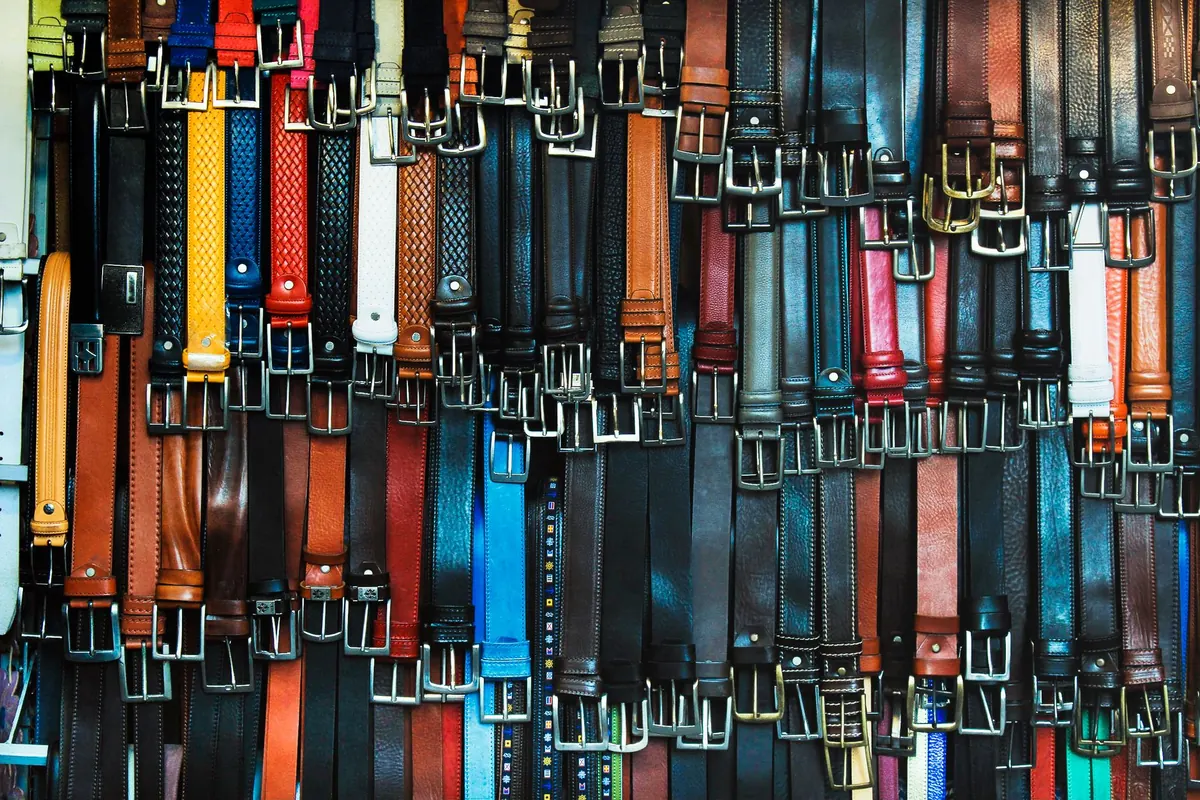
A belt is the least glamorous thing you'll put on this week, and one of the few accessories that has to work for a living. It holds up your trousers, but it also splits an outfit into top and bottom, adds a line of color, and quietly signals whether you dressed with intent or grabbed whatever was hanging on the hook.
That's why a badly chosen belt is so obvious. The tail curls past your hip. The buckle sits off-center. You're on the last hole, which means the belt is at least an inch too big and will only get worse. None of this is hard to avoid. It comes down to one measurement, one width decision, and a little honesty about what you actually wear.
Start With a Measurement, Not a Guess
Belt sizing is one of the few places in clothing where the numbers mean something, but only if you measure the right thing. Your jeans size is not the answer. Waistbands sit higher or lower than they used to, and vanity sizing has pushed labels around for years, so a 32 in one brand can measure closer to 34 with a tape. A belt, by contrast, is cut to a fixed length and doesn't care what the tag on your denim says.
The most reliable method is to copy a belt you already wear and like:
- Put on the trousers the new belt is meant for. Not the ones you plan to wear more often — the ones you'll actually reach for.
- Thread your current belt through the loops and fasten it on the hole you genuinely use, standing and sitting.
- Take it off and lay it flat on a table.
- Measure from the fold where the leather wraps around the buckle — the inside edge, not the tip of the prong — to the center of the hole you just used.
- That number in inches is your belt size.
No belt to copy? Wrap a soft tape measure around the spot where the belt will sit, over the trousers, and write the number down. As a rough starting point, belt size typically runs about two inches above your labeled pants size, but check the brand's chart before ordering, because some makers size by the middle hole and others by total length including the buckle. Buy from somewhere with an easy return policy and this problem disappears.
Why the Middle Hole Matters
Most belts are sized so that the middle of the five holes lands on the stated size. A 34 belt doesn't fit a 34 waist on the tightest setting — it fastens in the middle, leaving two holes tighter and two looser to work with. That range is the whole point. Bodies shift, layers change, and a belt you can only wear on the last hole is a belt you'll stop reaching for.
If you land between sizes, size up. A cobbler or a leather punch can add a hole; nobody can add leather back. For belts sold as small, medium, and large, look for the hole range in the product details rather than trusting the label — a "medium" that spans 32 to 36 inches is a different animal from one that spans 34 to 38. Braided, woven, and elastic belts forgive more, but the sizing rule still applies.
Width: The Choice You'll Feel Every Time You Sit Down
Width does more to determine where a belt belongs than color or buckle ever will. Four ranges cover almost everything:
- Around 1 inch (2.5 cm): the dress belt. Slim, quiet, made for suits and tailored wool trousers. It looks lost with heavy denim.
- About 1.25 inches (3 cm): the everyday width, and the safest first purchase. It works with chinos, wool trousers, and mid-weight jeans — which is why it's the default on most well-made belts.
- About 1.5 inches (4 cm): casual territory. Denim, workwear, canvas, boots. Buckles get bigger and more visible here.
- 1.75 inches and up: statement belts, Western styles, utility webbing. Excellent with the right outfit, distracting with the wrong one.
Your trouser loops get a vote too. Measure the opening of a loop before you buy: a 1.5-inch belt simply won't pass through the narrow loops on dress trousers, and a 1-inch strap in wide casual loops slides around all day. As a rule of thumb, keep the belt roughly proportional to the rest of the outfit — slim lapels and slim shoes want a slim belt; chunky boots and a heavy jacket want something wider.
Matching the Buckle to the Rest of You
Start with the hardware you're already wearing. A watch, a ring, a bag clasp, the metal on a pair of loafers or a jacket zip — pick one and echo it. Silver-toned buckles with steel and white metals, brass and gold tones with warmer pieces. Mixing metals is fine when one clearly dominates; what looks off is a bright polished buckle fighting everything else on your body.
Then match the buckle's mood to the outfit. A slim prong-and-frame buckle is the versatile classic and handles both a suit and a pair of chinos. Plaque or slide buckles look clean and modern, though they can slip on very smooth leather. Double-ring and D-ring closures belong to webbing belts and casual wear. Roller and Western buckles are for denim and boots, and they look out of place with tailoring. A polished finish reads dressier than brushed, and a large buckle on a narrow strap nearly always looks like an accident.
What Lasts: A Short Guide to Materials
Full-grain leather is the strongest of the family: it keeps its shape, develops a patina, and can be conditioned back to health. Top-grain is sanded and finished, slightly less durable but perfectly good. Bonded leather glues scraps together, and the phrase "genuine leather" usually signals that lower tier — the edges tend to split and peel within a year or two of daily wear. Suede offers texture instead of shine and suits casual outfits but dislikes rain. Braided and woven leather is comfortable and forgiving of a slightly off measurement. Webbing, canvas, and elastic are inexpensive, honest about being casual, and easy to live with.
Whichever you choose, a damp cloth once a week and a light conditioning once or twice a year will do most of the work. Hang a belt rather than coiling it tightly, and if it gets soaked, let it dry away from radiators and direct sun.
The Thirty-Second Fit Check
Before you pay, or before the return window closes, run through this:
- Fasten it on the middle hole. The tail should reach the first belt loop or just past it — not halfway to your hip.
- Sit down in it. If the buckle digs into your stomach or the strap buckles awkwardly, it's the wrong shape for you.
- Hold your watch and shoes next to the buckle and check the metal tones.
- Bend the strap in your hands. Leather should flex; it shouldn't crease like cardboard.
- Walk a few steps. Watch for a keeper that slides or a tip that catches.
A belt that fits is invisible. You fasten it in the morning and forget about it until you take it off, which is exactly the standard to aim for. Two good belts cover nearly everything most people own: one around 1.25 inches in brown or black for everyday and dressier wear, and one wider casual belt for denim and weekends. Get the measurement right, keep the hardware in the same family as your watch, and both will outlast the trousers they're holding up.
Photo: Keegan Everitt / Pexels