



Jeans are the one garment most of us buy without trying on first, and they're also the one where a single inch decides whether you wear them twice a week or bury them at the back of a drawer. Online, the problem gets worse. The same size 28 can measure 27 inches in one brand and 29.5 in another. A "mid-rise" can sit anywhere between your hip bone and your navel. "Comfort stretch" covers everything from firm denim to something closer to a knit legging. The solution isn't better guessing. It's treating rise, inseam, and fabric behavior as measurements rather than adjectives, and treating the return policy as part of the product you're buying.
Measure a pair you already own before you shop
Skip the size chart for a moment and go to your closet. Find the jeans that fit you best and lay them flat. Then take four measurements with a soft tape:
- Waistband: measure straight across the top edge, front only, then double the number.
- Front rise: from the crotch seam, where the inseams meet, straight up to the top of the waistband.
- Inseam: from that same crotch seam down the inside of the leg to the hem.
- Leg opening: across the hem, then double it.
Write those numbers down in a note on your phone. They are now your targets, and they're more useful than any size label. One caveat: if the jeans you're measuring are stretchy and have been worn a lot, they may have relaxed slightly, so treat the waist number as a range rather than an exact figure. If you have a rigid pair that fits well, that measurement is closer to the factory truth.
Rise is where most online orders fail
Rise is less about taste than about geometry. Low rise sits below the hip bones, mid-rise generally lands at or slightly below the hip bone, and high rise reaches the navel or above. But brands stretch those words freely, so the word on the tag tells you very little. The front-rise measurement is what matters, and it should be on the size chart or available from customer service.
Think about what happens when the rise is wrong. A high rise on a shorter torso can push the waistband into your ribs when you sit, and leave a gap at the small of your back. A low rise that looks fine standing will slide down the moment you bend or sit. Neither problem is fixable by sizing up or down, because the waist and hips would then be wrong too. If the waist fits but the hips pull, you need a different cut, not a different size. If the hips fit and the waist gaps, a curvy or contoured cut is usually the better answer than a belt.
Inseam is not your height
Your inseam has nothing to do with how tall you are. A five-foot-seven person with long legs and a five-foot-nine person with a long torso can wear completely different lengths. So measure a pair whose hem length you actually like, with the shoes you'd wear with them, and match that number.
A few practical rules. If you're between two inseams and you want a full-length look, buy the longer one and have it hemmed; you cannot add fabric later. If you like a cuff, remember that rolling adds a visible break and shortens the line, so a slightly longer inseam gives you options. If the jeans have a faded or chain-stitched hem you want to preserve, ask a tailor to reattach the original hem rather than cut it off. And check whether the chart is listing the garment's inseam or a recommended body inseam, because those are different numbers and the confusion causes a lot of returns.
Stretch fabric has two qualities, not one
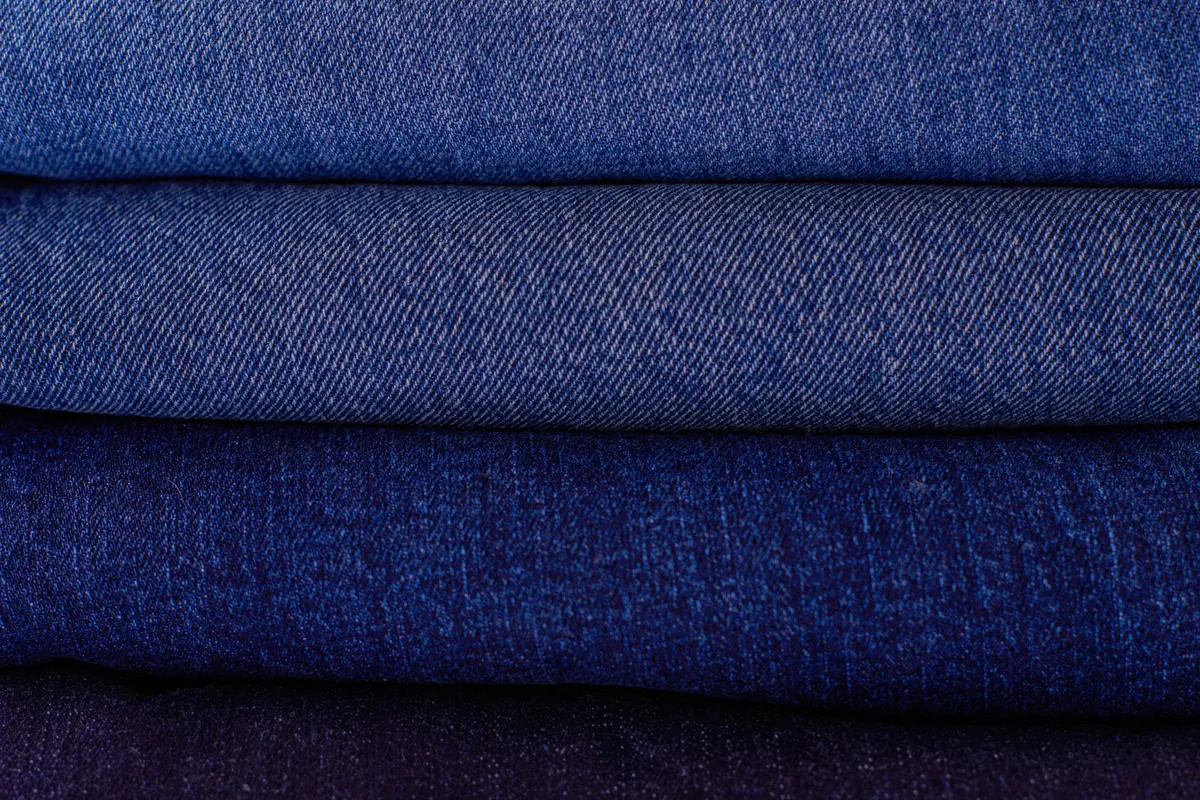
Stretch percentage tells you how much the denim gives. Recovery tells you whether it comes back. The second one is what ruins jeans. A pair with a high elastane content can feel wonderful in the fitting room and look baggy at the knees by mid-afternoon. Rigid cotton denim, by contrast, barely moves; it molds to you over weeks and holds its shape, but it will not forgive a snug waist on day one.
In practice: with stretch denim, buy the size that feels comfortable immediately, not the one you're squeezing into, because it won't shrink back to a smaller shape. With rigid denim, a waistband that closes without strain but feels firm is about right, since it will relax a little with wear. Fabric weight matters too. Heavier denim holds its shape better over time; lighter denim feels softer but tends to bag out faster.
Read the size chart like a spec sheet
Before you add anything to your cart, confirm a few things. Does the chart describe body measurements or garment measurements? Are the numbers in inches or centimeters? Which size is the model wearing, and how tall is she? Reviews are useful here, but only the ones that mention the reviewer's height, usual size, and the size they ordered.
Also accept that vanity sizing is real and inconsistent. Your usual size in one brand may be two sizes off in another. Ordering your "normal" number without checking is the single easiest mistake to avoid.
Treat the return policy as part of the purchase
A generous return policy is worth more than a small discount. Before buying, find out: Is return shipping free or deducted from your refund? How long is the window? Are sale items final sale? Is it exchange-only? Do tags need to be attached? If returns are free and easy, ordering two sizes and sending one back is a smarter move than guessing once and keeping something you'll never wear.
Keep the packaging and tags until you're sure, and try jeans on indoors, on a clean floor, so you don't jeopardize the return. If you're shopping somewhere with a strict policy, that's a reason to be more careful about measurements, not less.
A fit check you can do in ten minutes
- Put them on with the shoes you'll wear most often.
- Sit down on a low chair or the floor. The waistband shouldn't dig in or gap away from your back.
- Squat, then walk up a flight of stairs. If you're pulling them up constantly, the rise or the waist is wrong.
- Check the pockets. If they flare open, the hips are too tight.
- Look in a mirror from the side. Horizontal creases radiating from the fly mean too little room across the hips; a loose, drooping seat means too much.
- Wear them indoors for twenty minutes and check how the fabric relaxes. Knees and waist are the first places to give.
Keep a record and stop guessing
Every time you buy a pair, note the brand, style, size, rise, inseam, fabric content, and how they fit after a month of wear. Do that for two or three purchases and you'll have a personal reference that beats any size chart. You'll also learn which brands cut for your shape and which ones you can order from without thinking. Buying jeans online never becomes effortless, but it can become predictable, and that's the goal. If a pair doesn't work, send it back within the return window instead of saving it for a tailor. A rise that's wrong usually can't be corrected without rebuilding the waistband, and that kind of alteration costs more than the jeans are worth.
Photo: Viktorya Sergeeva 🫂 / Pexels